Search results for: 'three'
-
Thyroxine-binding Globulin (TBG), Serum$316
Learn MoreThyroxine-binding globulin (TBG) is a globulin that binds thyroid hormones in circulation. It is one of three transport proteins (along with transthyretin and serum albumin) responsible for carrying the thyroid hormones thyroxine (T4) and triiodothyronine (T3) in the bloodstream. Of these three proteins, TBG has the highest affinity for T4 and T3 but is present in the lowest concentration. Despite its low concentration, TBG carries the majority of T4 in the blood plasma.
-
Hematocrit HCT Blood Test$11
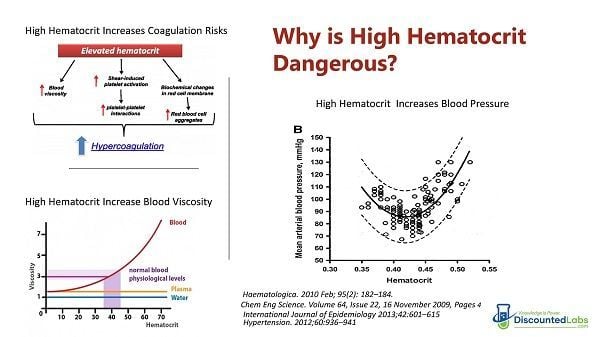
Learn MoreThe volume measurement, or hct blood test, is the proportion of blood that the red blood cells take up. Hemoglobin, on the other hand, is a density or concentration measurement and is expressed in grams per liter or deciliter. (Hemoglobin is, if you will recall from your high school biology, the iron-based protein that transports oxygen.) RBC is a simple count and is usually expressed as the number of million red blood cells that you have per microliter. Usually, hematocrit is three times the amount of hemoglobin.
Testosterone replacement therapy (TRT) increases hematocrit in most men. Read more about how to decrease hematocrit.
NOTE: Hematocrit is also part of the CBC panel, so there is no need to order separately if your order already includes CBC.
-
Estrogens Total Test$75
Learn MoreEstrogen is the primary female sex hormone as well as a medication. It is responsible for the development and regulation of the female reproductive system and secondary sex characteristics. There are three major endogenous estrogens in women and men: estrone, estradiol, and estriol. This test does not specify each of these estrogens.
-
Estrone$106
Learn MoreEstrone (E1) is one of the three estrogens, which also include estriol and estradiol. Estrone is the least abundant of the three and is considered a pro-hormone of estradiol.
-
PreOp Surgery Lab Test Panel$73
Learn MoreThe pre-op (surgery) blood test includes the three test panels (CBC, CMP, and Prothrombin Time Test) most commonly ordered before a person has surgery. Pre-operative testing is usually done during the few days before the surgery. This panel lets your surgeon know what to be aware of in case of complications during surgery.
-
Creatine Kinase (CK) or CPK , Total Plus Isoenzymes Test$95
Learn MoreThis lab test panel includes Total CK (or CPK) and relative percentage of BB (CK-1), MB (CK-2), and MM (CK-3); the percentage of macro CK, if present. The CK or CPK isoenzyme test is used to diagnose myocardial infarction (MI). Three fractions normally may be found, each an isoenzyme: • MM is found in normal serum. • MB is the myocardial fraction associated with MI and occurs in certain other states. MB can be used in the estimation of infarct size.
-
Lead Blood Test$88
Learn MoreBlood Test to Detect Lead Poisoning Lead poisoning is dangerous and can contribute to numerous health complications. This heavy metal is present in gasoline, medical equipment, paints, batteries, metal alloys and more. Lead is primarily deposited in bones, and it affects individuals directly, depending on their age and health levels. It is excreted through urine and feces, but it can also be found in blood, breast milk, saliva, and sweat.
-
A1c- Hemoglobin (Hgb)$21
Learn MoreThe A1c test works by measuring the hemoglobin A1c level. Hemoglobin is stored in the red blood cells. When glucose levels are high, the sugar starts to combine with the hemoglobin. It takes the body 8 to 12 weeks to bring hemoglobin A1c levels back to normal. Therefore, if hemoglobin A1c levels are high, that means that there has been a high level of glucose in the blood over the last 2 to 3 months.
-
Glutathione Blood Test$202
Learn MoreBoth chronically low and high levels of glutathione in the body are indicative of potentially debilitating health problems. Glutathione level is a crucial marker for many diseases, both chronic and acute. Given the importance of this protein to human health; discovering your glutathione levels could be one more way to monitor health levels, immune function, and the potential risk of diseases that have been associated with chronically low or high levels of this essential peptide.
-
Mononucleosis Test: Epstein-Barr Virus (EBV) Antibodies Panel$379
Learn MoreEpstein-Barr (EB) virus is a herpes group virus that is ubiquitous. It leads to infectious mononucleosis and may play a role in the development of Burkitt lymphoma, some nasopharyngeal carcinomas, and a few rare genetic lymphoproliferative disorders. Antibodies to early antigen, IgM and IgG antibodies to viral capsid antigen (VCA), and antibodies to Epstein-Barr nuclear antigen (EBNA) are all part of the EBV test.
-
Water Retention Panel: Aldosterone/Plasma Renin Activity Ratio, LC/MS/MS$204
Learn MoreRenin, also known as angiotensinogenase, is an enzyme that the kidneys produce to regulate aldosterone production. It’s also essential in the renin–angiotensin aldosterone system (RAAS) which maintains your body’s fluid balance and blood pressure. Aldosterone is the primary of several endogenous members of the class of mineralocorticoids in humans. Aldosterone tends to promote sodium and water retention, and lower plasma postasium concentrations.
-
C-Reactive Protein- High Sensitivity hs-CRP$43
Learn MoreThis high sensitivity CRP test is used along other blood markers to assess a patient's potential risk for cardiovascular disease. To illustrate the difference between CRP and hs-CRP, traditional testing measures CRP (quantitative) within the range of 10 to 1,000 mg/L, whereas hs-CRP values range from 0.5 to 10 mg/L. In simpler terms, hs-CRP measures trace amounts of CRP in the blood. Hs-CRP is the analyte of choice for cardiovascular risk assessment
-
Estradiol (Regular, CLIA assay)$30
Learn MoreThis test is not the sensitive estradiol test but the regular one. It is not recommended for men (it is adequate for pre-menapausal women). The results from this test are usually available 2 business days faster than the sensitive estradiol test.
-
Hair Loss Test Panel$420
Learn MoreThis lab test panel includes main blood test makers involved in hair loss in women and men: Complete Blood Count (CBC)- Can detect potential low hemoglobin and infections that can lead to hair loss. Ferritin- Low ferritin, an iron storage protein, has been linked to hair loss and slow down of hair growth. Iron and Total Iron Capacity (TIBC)- Low iron anemia has been linked to hair loss. Hyperandrogenism: Excessive male hormones (androgens): Total Testosterone (LC/MS), Free Testosterone (Equilibrium Ultrafiltration), DHEA-S, Dihydrotestosterone (DHT) Hypothyroidism and Hyperthyroidism: Thyroid Stimulation Hormone (TSH), Free Triidothyronine (Free T3)
-
CPK Blood Test (Creatine Phosphokinase)$24
Learn MoreCPK is creatine phosphokinase, an enzyme in the heart, brain, and skeletal muscle. High CPK can indicate muscle destruction, heart attacks, and central nervous system issues. Long-term exposure to high CPK can load up your kidneys and cause muscle loss and weakness. Sometimes we have no symptoms when CPK is high, but most of the time, we have body aches and soreness. Resistance training can raise CPK, so stop working out for at least five days before the CPK test.
-
PROTEIN, GLOBULIN & ALBUMIN$17
Learn MoreProtein, Gloublin and Albumin - The major proteins seen in the serum are albumin and globulin-the latter being primarily alpha 1 and alpha 2 globulin, beta globulin and gamma globulin. Albumin accounts for more than 50% of the total serum proteins. The albumin to globulin (A/G) ratio has been used as an index of disease state, however, it is not a specific marker for disease because it does not indicate which specific proteins are altered. The normal A/G ratio is 0.8-2.0. The A/G ratio can be decreased in response to a low albumin or to elevated globulins. Total globulins may be increased in some chronic inflammatory diseases (TB, syphilis) multiple myeloma, collagen disease, and rheumatoid arthritis. Decreased levels are seen in hepatic dysfunction, renal disease and various neoplasms.
-
ALLERGY MOLD PANEL, COMPLETE$170
Learn MoreAllergy Mold Panel, Complete -
This panel tests for specific IgE antibodies to 6 molds that are commonly associated with allergies. Allergen-specific serum IgE testing is considered comparable to skin testing and may be preferred in some clinical situations. However, a positive test result only indicates that a patient is sensitized to the allergen of concern. Many IgE-sensitized individuals do not develop any symptoms when exposed to the allergen. Only a qualified medical professional who has conducted a thorough clinical evaluation should make an allergy diagnosis. These are the 6 molds tested:
Alternaria alternata (m6)
Alternaria is one of the most common outdoor molds and a frequent cause of mold allergies. When Alternaria spores are inhaled, they can trigger an allergic response in susceptible individuals. This can lead to symptoms like sneezing, runny nose, nasal congestion, and asthma exacerbations.1
Aspergillus fumigatus (m3)
Aspergillus is a genus of molds that can cause both allergic reactions and infections, especially in people with weakened immune systems. Aspergillus fumigatus is a common indoor mold that can trigger allergic rhinitis, asthma, and a rare condition called allergic bronchopulmonary aspergillosis (ABPA).2
Cladosporium herbarum (m2)
Cladosporium is one of the most common outdoor molds and a frequent cause of mold allergies. When breathed in by sensitive people, Cladosporium spores can cause allergic reactions like sneezing, nasal congestion, and asthma symptoms. 1
Mucor racemosus (m4)
Mucor is a genus of molds that can cause allergic reactions in some people. Inhaling Mucor spores may lead to symptoms like nasal congestion, sneezing, and asthma exacerbations in those with a Mucor allergy.
Penicillium notatum (m1)
Penicillium is a common indoor mold that can cause allergic reactions. When Penicillium spores are inhaled, they may trigger symptoms such as sneezing, runny nose, nasal congestion, and asthma in individuals with a Penicillium allergy.1
Stemphylium botryosum (m10)
Stemphylium is a genus of molds that can be an allergen for some people. Inhaling Stemphylium spores may lead to allergic rhinitis symptoms like sneezing, nasal congestion, and itchy/watery eyes in those with a Stemphylium allergy.In conclusion, when sensitive people inhale the spores from these common mold species, they can all cause allergic reactions. The allergic symptoms typically include nasal congestion, sneezing, runny nose, and asthma exacerbations. Avoiding exposure to these molds is key for managing mold allergies.12
-
Urinalysis$15
Learn MoreThe Urinalysis test panel screens for a variety of conditions including urinary tract infections ( UTI ), urinary bladder disease, kidney disease and diabetes. Tests included: Color, Appearance, Specific gravity, pH, Protein, Glucose, Occult blood, Ketones, Leukocyte esterase, Nitrite, Bilirubin, Urobilinogen, and Microscopic examination of urine sediment
-
DHT Test$89
Learn MoreThis test measures the amount of dihydrotestosterone (DHT) in the blood. Low DHT has been associated with low libido and high DHT has been linked to acne, hair loss and benign prostatic inflammation in a minority of men.
-
hCG Pregnancy Test$35
Learn MoreA blood pregnancy test is a medical test used to determine if a woman is pregnant by detecting the presence of the hormone hCG in her blood. Shortly after the fertilized egg implants into the uterine lining, the developing placenta produces the hormone known as hCG. This test is the Quantitative hCG test (also known as a beta hCG test) and measures the specific amount of hCG present in the blood. It can help determine how far along a pregnancy is, monitor the progress of the pregnancy, and detect potential issues like an ectopic pregnancy or a miscarriage.
Blood pregnancy tests are more sensitive than over-the-counter urine pregnancy tests and can detect pregnancy earlier – as soon as 6 to 8 days after ovulation.